
Solo or Group Volunteering? A Guide to Choosing the Right Program in Kathmandu
Summary
Choosing between solo and group volunteering in Kathmandu depends on personal preference. Solo placements offer deeper cultural immersion and faster local connections, while group placements provide built-in support and shared experiences. Consider your travel experience, comfort level, and placement length before deciding. Both paths lead to meaningful, rewarding volunteer experiences in Kathmandu.
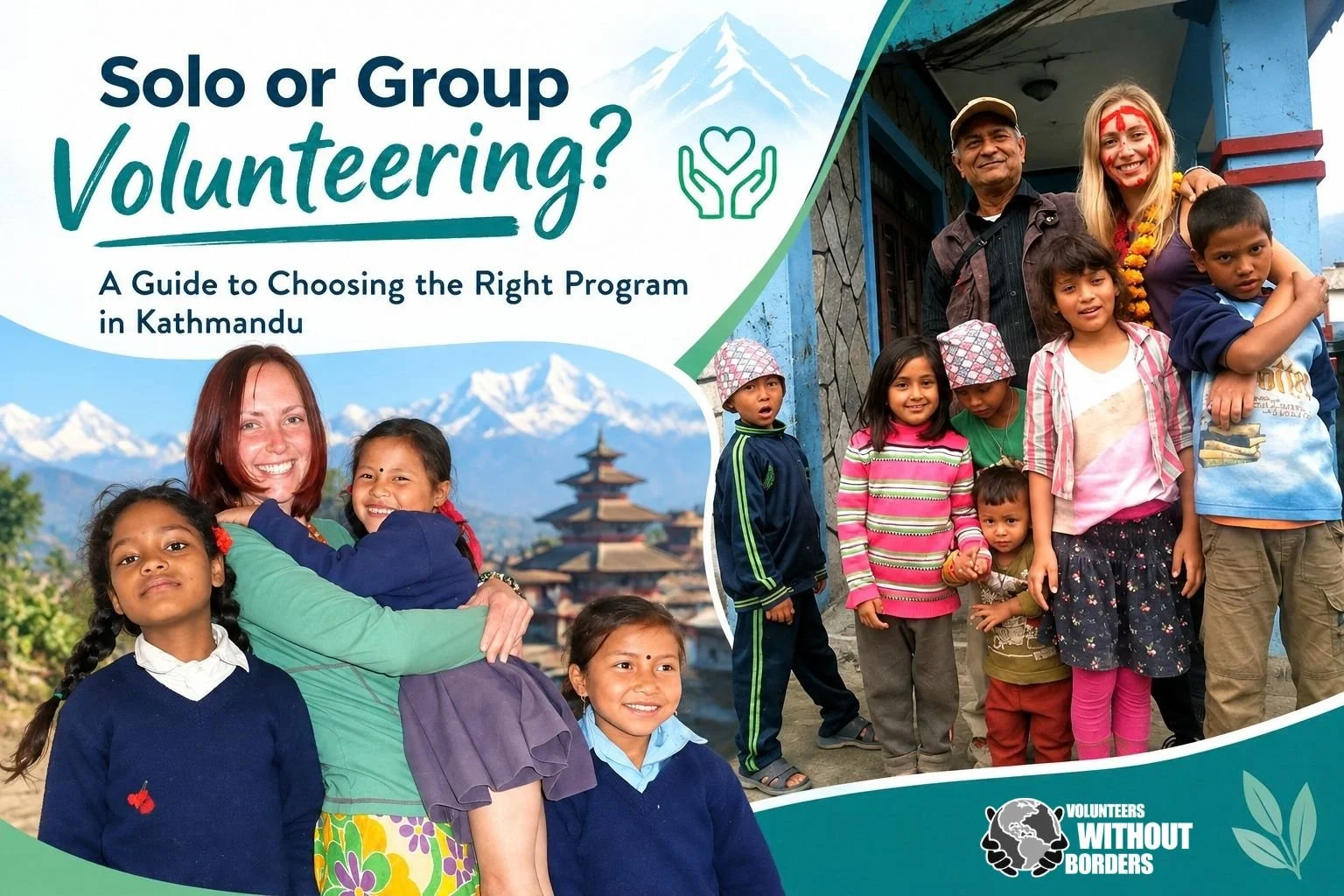
Deciding how to volunteer can feel almost as big a decision as deciding where to go. Once you've settled on Kathmandu, there's still one more choice to make - do you go it alone, or join a group of other volunteers? Both paths work well, and neither one is really "better." It comes down to what kind of experience you're after. If you're weighing up volunteering programs in Kathmandu, it helps to understand what each option actually looks like before you commit.
What Solo Volunteering Looks Like
Going solo means you're placed on your own, usually alongside local staff and the community you're there to help, rather than a group of fellow travelers. It tends to suit people who want to dive straight into the culture without much distraction.
You'll likely pick up the local language faster, simply because you're relying on it more
Relationships with local staff and children tend to form quickly, since there's no group to fall back on
It can feel a bit isolating in the first few days, especially if this is your first time traveling alone
Daily routines are shaped more by the project itself than by a group schedule
We often hear from solo volunteers that the first week is the hardest, and after that, it starts to feel like home.
What Group Placements Look Like
Group volunteering means you're placed with other international volunteers, often staying together and working the same shifts. It's a popular choice for first-time volunteers or younger travelers who want some familiar faces around.
There's built-in support from day one, which helps if you're nervous about the trip
You get to share the experience with people who understand what you're going through, in real time
Group dynamics can occasionally slow things down, especially if personalities clash
It's usually easier to explore Kathmandu on days off, since you already have people to go with
How to Decide Between the Two
There's no universal right answer here, but a few questions can help narrow it down:
Have you traveled alone before, or would this be a first?
Do you want to focus mostly on the local community, or also enjoy the social side of volunteering?
How long is your placement - a short one might suit solo travel better, while longer stays often benefit from group support?
Are you comfortable with some initial discomfort in exchange for a deeper cultural connection?
As a trusted volunteering organization, we have placed volunteers in Kathmandu through both solo and group setups for years, and honestly, we've seen both work out wonderfully depending on the person.
Neither option guarantees a better experience. It really just depends on you. Some people thrive with the independence solo placements offer, while others do their best work surrounded by a support system. Once you've got a sense of which direction suits you, the application process only takes a couple of minutes to get started. And if you still have questions about solo versus group placements in Kathmandu, don't hesitate to contact us. We're happy to help you figure out what's the right fit.