
Summary: You can develop several skills through volunteering. You can gain communication and interpersonal skills. Many people also develop leadership qualities through volunteering.
Volunteering is about more than giving your time to help others. It is also an opportunity to discover your strengths, learn new abilities, and become more confident in everyday situations. For many people, volunteering provides a chance to step outside their comfort zone and interact with individuals from different backgrounds. It can also help develop practical abilities that are useful in personal life, education, and future careers.
So, is volunteer life skills development impactful? Here are four important areas of life skills development that can make a lasting difference.
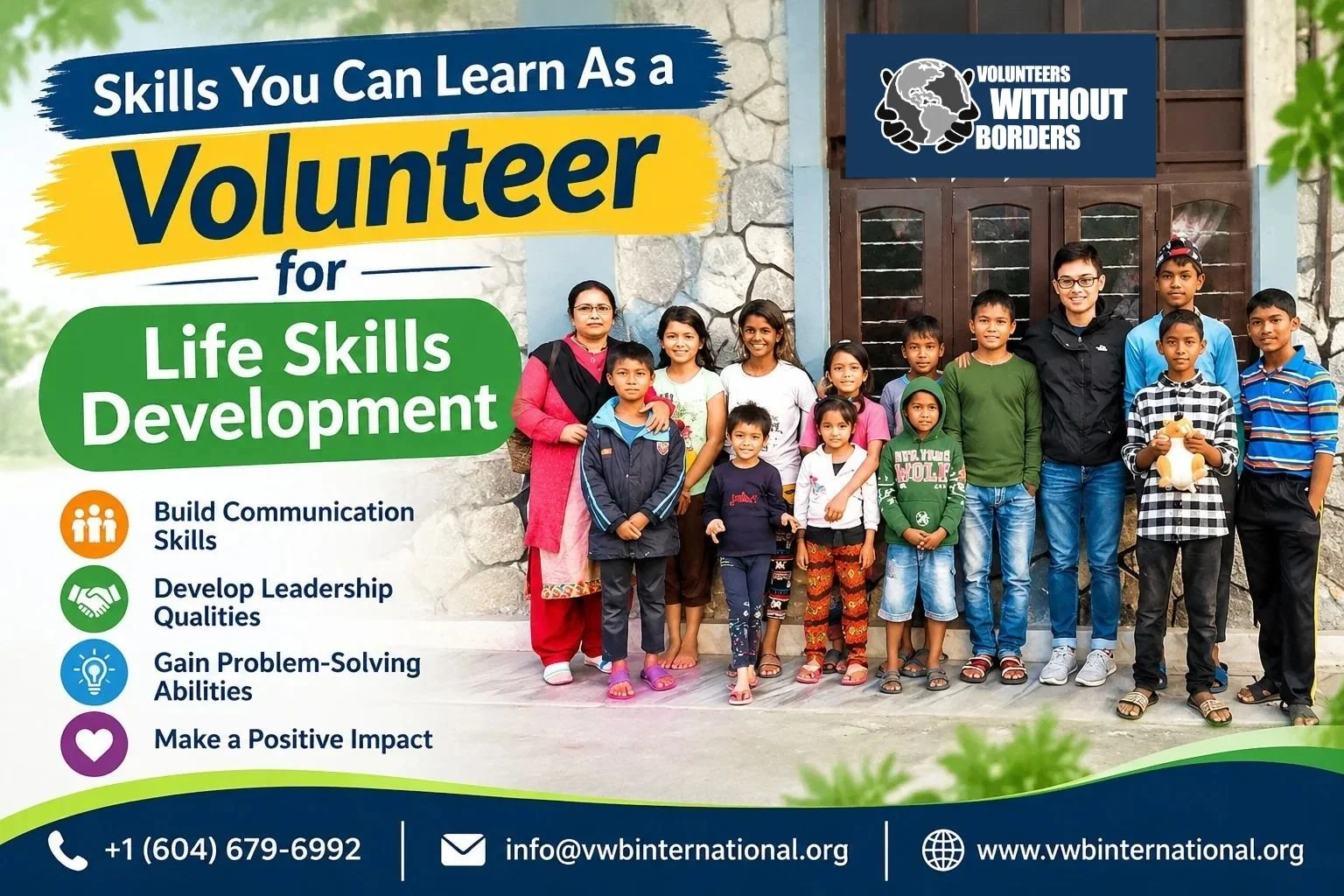
Practical Life Skills You Can Gain As a Volunteer for Personal Development
Communication and Interpersonal Skills
Good communication is essential in almost every area of life. Volunteering gives you opportunities to interact with community members, fellow volunteers, and project coordinators. When you join our volunteering programs, you learn how to express ideas clearly, listen carefully, and understand different perspectives. For example, helping children with their studies can improve your ability to explain information in simple ways.
Leadership and Teamwork Skills
Many volunteer activities involve working with others towards a shared goal. This helps you understand the importance of cooperation, responsibility, and leadership. You may need to organize an activity, distribute tasks, or help other volunteers complete a project. These responsibilities teach you how to take initiative and support a team. You can also learn that leadership is not always about giving instructions. Sometimes, it means listening to others, offering help, and making thoughtful decisions.
Problem-Solving and Adaptability
Volunteer work does not always go according to plan. Wh
en you go to different destinations for volunteering, activities may face unexpected challenges, limited resources, or communication difficulties. Learning how to respond calmly can improve your problem-solving abilities. For instance, if a planned educational activity doesn’t work well, you may need to find another way to explain the lesson.
Empathy, Time Management, and Personal Responsibility
Volunteering can help you understand the experiences and challenges faced by other people. Working with children, supporting older adults, or participating in community development activities can help develop patience, empathy, and compassion. It also teaches you to manage your time and take responsibility for your commitments. Arriving on time, completing assigned tasks, and respecting other people's needs are important habits that extend beyond volunteer work.
Volunteering offers valuable opportunities for personal growth and practical life skills development. Get in touch with us if you want to learn more about our organization.